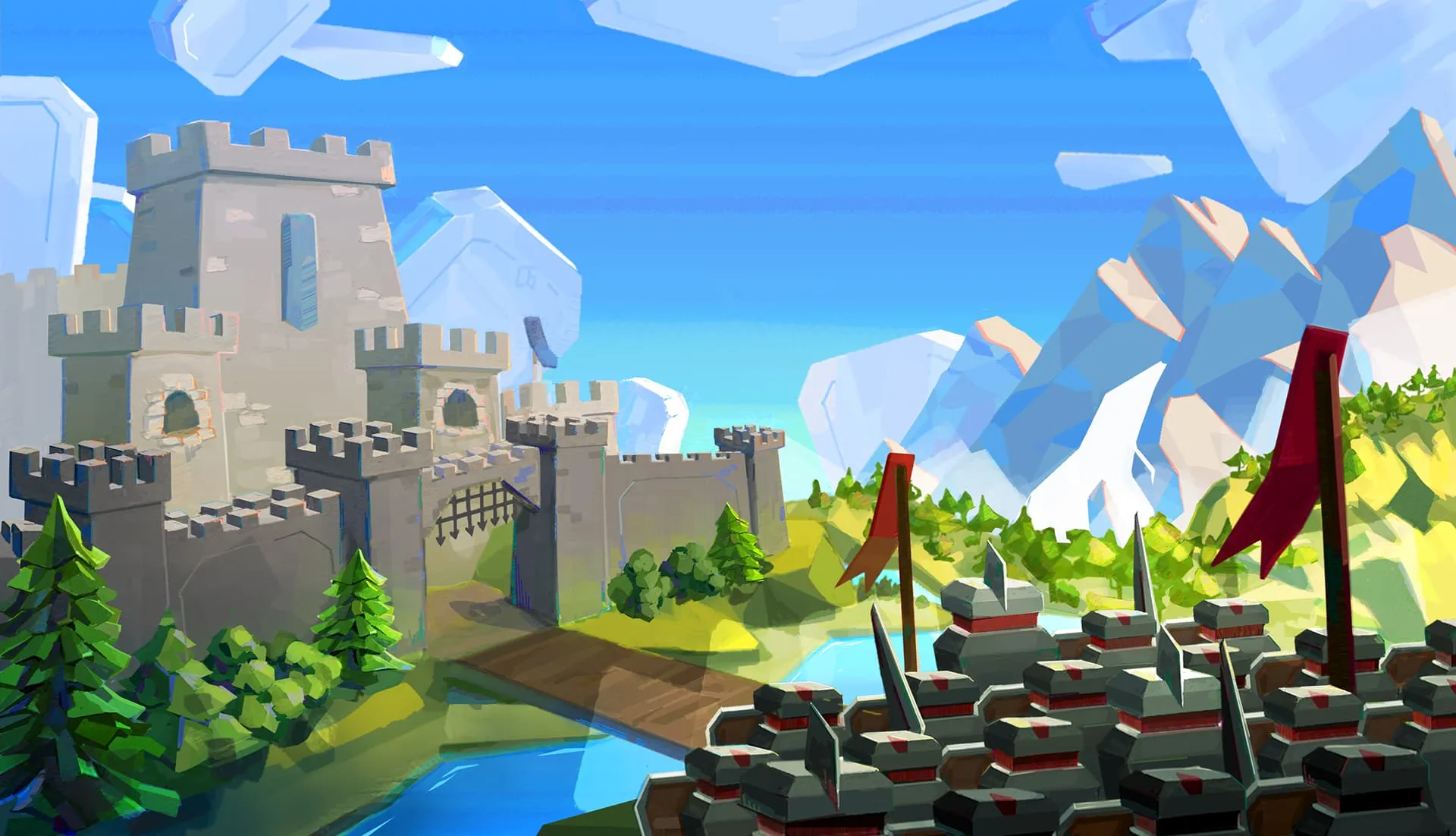
A year has passed since the launch of Kingdom’s Deck. I am no longer working on new updates, so I consider the project officially finished. It’s been a wild ride—definitely fun, occasionally stressful, and packed with lessons. I’m planning to write a proper postmortem on everything I’ve learned, but first, I wanted to share some of the raw numbers:
- 55k copies sold
- 125k wishlist additions
- 49k unique users (Which means that if you still have it sitting in your backlog! Don’t worry, Many do the same thing.)
Choosing what I could make
Unlike my previous projects, I went into this one knowing it couldn’t just be another experiment. This game actually needed to sell if I wanted to keep doing this. I’m a big believer that people “buy with their eyes” online. These days, social media is the main way (if not the only way) to show off our work, so I needed something that could stand out from the thousands of games released every year.
Choosing the right genre was another big starting point. I’ve always been a huge fan of strategy games; I can’t even count how many hours I’ve spent playing Civilization, Age of Empires, and other similar titles. I was very clear that this would be a Steam release. Since RTS is a niche I know inside and out, and Steam players happen to love strategy games, starting there just felt like a logical decision.
So… I’m an engineer, not an artist. I didn’t have the budget to hire anyone, and I didn’t know anyone willing to join a “no-pay” passion project. What was I supposed to do?

Cue the panic. Well, not full-blown panic, but I definitely had to find my own “artistic voice.” First, I tried my hand at pixel art. My attempt was cute, but it just wasn’t at the level where I could actually sell something. And as I said before: people buy with their eyes.

So I learned a little bit of Blender, and went to create something with that knoledge, low poly was a better option for me, because using light and shaders was a good choice for someone like me (I’m color blind), so it will solve many problems with colorimetry and I could make the game stand out with the correct shaders, the first version of Kingdoms deck looked like this, not super fancy but it was something
Sharing the game everywhere
Once I actually had something to show, the next step was to shout it from the rooftops. I tried everything: Reels, TikTok, YouTube, Facebook, X, even mail. Some things landed, but other times? Crickets. Not a single like. It’s incredibly frustrating, but I suppose every game has its niche, and some platforms just vibe better with certain genres than others.
For me, the “magic” happened on Reddit and X. Even though I’d occasionally post updates that got almost no traction, and other that worked very well, staying active opened doors I didn’t expect. I originally went into social media trying to sell the game directly to players, but it actually ended up being a tool to connect with my biggest partners: the guys from Rogue Duck Interactive.
They are absolute legends, but the real takeaway here is that sharing the game (even the tiny, incremental updates) made all the difference. It got people talking, and eventually, the right bells started ringing.
Going for China
Everyone tells you that the Chinese market is gold, but what they don’t always tell you is just how difficult it is to break into if you are an independent western developer. Between localization challenges, cultural nuances, and storefront visibility, it’s something you have to deal with.
In my case, Gamersky Games stepped in to handle the Asian market for Kingdom’s Deck. Did it make a difference? Absolutely.
20% of all copies sold came from the Asian market.
When you’re looking at a total of 55,000 copies, that means roughly 11,000 sales came directly from a region I wouldn’t have been able to effectively reach on my own.
Do not leave this market behind. If you are making a game, find a publisher or a partner who knows the landscape and can open those doors for you. It is entirely worth the effort.
Unpolished corners
At launch, Kingdom’s Deck had plenty of unpolished corners. To be honest, it still does, but those rough edges were much more obvious on day one. I’m not going to be too harsh on myself, this was my first commercial game, after all—but looking back, there are definitely things I would have handled differently.
The biggest mismatch came down to game length. I originally envisioned Kingdom’s Deck as a short experience that you could finish in just a few hours. (I love short games) The problem? It belongs to a genre where players are used to sinking hundreds, if not thousands, of hours into a single title. Strategy fans come to the table with massive expectations for replayability.
Much of the critical feedback I received during those first few days stemmed entirely from that initial lack of content. If I could go back, I would have delayed the launch by a few months just to build out the scope. Through a lot of work and post-launch updates, the game now sits at a much healthier 10 to 20 hours of playtime.
Personal Note: Before you launch, study your genre’s baseline. Know exactly how many hours of content you are delivering, and make sure it aligns with what the community expects.
The other rough edges came straight from the game design itself. When I started development, I genuinely believed I knew the strategy genre inside and out because of how much I played them. The hard truth? I only knew it as a player, which is a completely different universe from viewing it as a designer.
Understanding why a mechanic feels good to play is miles away from knowing how to build, balance, and scale it from scratch without breaking your own game loops. While I have a much deeper, more mature grasp of strategy design now, Kingdom’s Deck was still an incredible first approach to the genre. It was the trial by fire I needed to bridge the gap between playing a game and engineering one.
Another chance, Kingdom’s Deck 2?
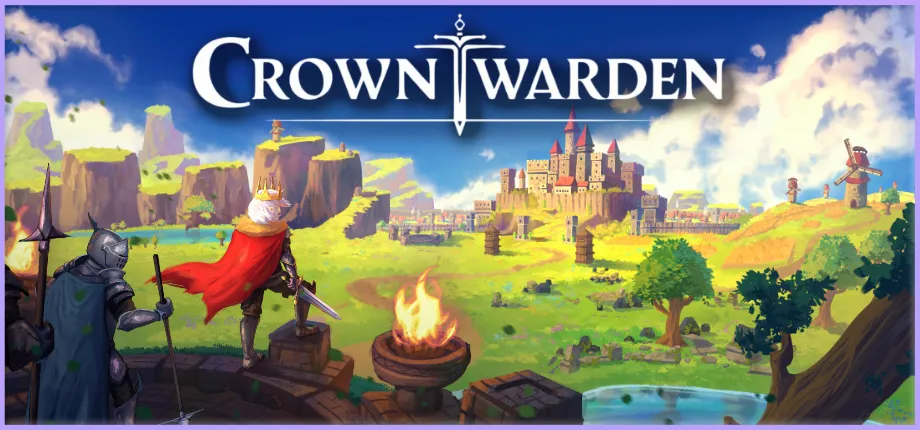
When my friends see what I’m working on now (my next project, Crownwarden) they often ask me if I am making Kingdom’s Deck 2.
The short answer? No.
Mechanically, it plays completely differently from Kingdom’s Deck. But if I’m being completely honest, I am recycling quite a bit. Since both titles fall under the RTS umbrella, I already have a massive foundation of backend code completely solved, which has saved me months of foundational work. Plus, using Kingdom’s Deck assets for early prototyping has allowed me to test ideas incredibly fast without starting from a blank canvas.
More than just saving time, though, this next game is going to be a much more mature, well rounded experience. (I hope)
I’m walking into development with a clear roadmap. The design blind spots I had the first time around? Solved. The content length expectations? Accounted for. I’m incredibly excited to apply everything Kingdom’s Deck taught me, and I can’t wait to see where this new journey lands.